Doha Debates Podcast
The Doha Debates Podcast brings together global voices for Majlis-style debates on the ideas shaping our world. This season continues with rigorous, truth-seeking conversations in a live, in-person setting, with new episodes every Tuesday. Topics include the nature of disagreement, aging, and justice after Gaza.
حلقات

Does football bring out the best and worst in people?
Football (or soccer) is more than just a game; it's a global phenomenon. Today, as football club ownership, team talent and the fandom all evolve, have the meaning and merits of the sport also changed? What can we learn about ourselves and our world by examining the current state of the “beautiful game”?
This episode uses football as a lens to explore questions of capitalism, nationalism, power

Is having children a moral obligation?
In many places around the world, birth rates have dropped to historic lows. Some argue this is a good thing in a world grappling with environmental crises and waning resources. Others fear the loss of legacy and even the extinction of humanity.
In this episode, we explore the meaning and the impact of falling birth rates. Is it a sign of liberation from outdated norms? Is it proof that individu

Who decides which forms of resistance are legitimate?
History is full of resistance movements that were condemned in their time but later celebrated, including the French Resistance, women’s suffrage and the fight against apartheid led by Nelson Mandela. This begs the question: Which modern resistance movements will the world honor in the future, and what determines whether or not they are recognized?
In this episode, we explore the question of wha

Contemporary art: Progressive or pointless?
Some critics argue that contemporary art has lost touch with the principles and traditions that define artistic greatness. Others see its break with tradition as liberating; a move toward more inclusion, experimentation and personal and political expression.
This episode explores what makes great art in the 21st century. Is it adherence to tradition, or disruption and reinvention? Is artistic be

Is social justice replacing religion in the West?
This episode was recorded on December 6th, 2025.
In recent decades, traditional religious frameworks have steadily lost influence in Western societies. At the same time, we’ve seen the emergence of social justice movements focused on uncovering and dismantling systemic forms of oppression. Some argue that these secular movements are a replacement for faith. Others say they don’t offer the same m

Should we ever take conspiracy theories seriously?
Conspiracy theories used to be dismissed as paranoid fringe thinking, found only in the far corners of the internet or every day hearsay. But today, they've migrated to the mainstream. Claims about election meddling, the real origins of COVID-19, and the deep state circulate widely and are even repeated by government officials.
This episode asks whether conspiracy theories have any actual value
Will AI bring us together or drive us apart?
Will AI unite or divide us?
Artificial intelligence systems often reflect the priorities, biases and beliefs of the people who designed and created them. It’s critical to determine the sources of its worldview as it continues to influence how we think, learn and even love.
This episode explores whether AI will bring us together or widen social divides. Can we create AI models that truly reflec

Is everyone paying their fair share of taxes?
The idea of taxing the rich is hardly new, but the question of whether it creates a fairer world remains highly contested.
This debate asks what would happen if we increased taxation on the billionaire class. Would it actually create greater economic stability and social equity? Or would it make things worse? Are taxes even aneffective way to redistribute wealth, or should we be looking at other

Fate vs. free will: Do we make our own choices?
Are we truly able to shape our own lives, or are we following a script we can’t rewrite?
From Islamic perspectives to groundbreaking neuroscientific research, this episode examines how differing theories about free will shape the way we look at morality, responsibility and justice.
💬 Join the conversation in the comments.
Featuring:
Heather Berlin: Associate professor of psychiatry an

Are lost ancient civilizations real?
Archaeology textbooks tell a familiar story about human history: Stone tools, cave art, nomadic life, then civilization.
But a growing number of voices think we're missing a chapter—signs of an earlier advanced culture, lost to time.
This episode explores the question underneath it all: Is there really a forgotten era of human ingenuity, or are we inventing a more epic past because it makes
Are we the most intelligent beings in the universe?
For millennia, we’ve wondered about the possibility of intelligent life beyond Earth. Recently, former U.S. president Barack Obama asserted that aliens are, in fact, real, and the Trump administration has pushed to declassify government files on UAPs and UFOs, leaving us with even more questions.
In this episode, we explore what might happen if we discovered that we are not alone in the univers
Is war inevitable?
This program was recorded in August 2025. The views expressed in this episode are the participants’ own and do not necessarily reflect those of Doha Debates.
Is war inevitable, or preventable? This episode examines whether we’re capable of breaking the cycle of war.
💬 Join the conversation in the comments.
Featuring:
Charli Carpenter: Author and professor of political science and legal
Has modern architecture lost touch with humanity?
What does our architecture say about who we are—and who we want to become?
For centuries, architecture has represented our cultural beliefs, traditions and needs. It’s shaped how we live, how we relate to each other and even our mood.
But modern architecture’s critics say it has a big problem. They argue it’s disconnected from human expression and context, with uniform or minimalist buildings

Are we on the verge of civilization’s collapse or rebirth?
The prospect of societal collapse has been examined throughout human history. Thinkers from Ibn Khaldun to Karl Marx have argued that civilization carries the seeds of its own downfall.
This episode asks whether we are witnessing modern-day civilization’s collapse or renewal. Will our modern-day focus on individualism, technology and comfort lead to decline or a revolutionary new beginning? Or

Will tech utopias rescue or ruin humanity?
Would you live in a futuristic, tech-run city?
Tech leaders from across the globe are racing to build so-called tech utopias, claiming that they’re a new societal blueprint for humanity. But will this approach actually uplift us all or leave most of us behind?
This debate explores whether tech-run cities like Praxis or Próspera truly offer a brighter future for all, or whether they are exclus

Are superheroes the moral leaders of our time?
Are superheroes moral leaders—or caped propagandists?
From comic books to billion-dollar blockbusters, superheroes have fascinated us for over a century. But what do these stories really teach us? Are they our moral guides or do they reinforce Western ideals, individualism and even militarism?
This debate explores why anti-heroes like the Joker captivate us, what it means when our moral icons

Have universities become bastions of ideology instead of truth?
Over the past decade, critics argue that identity politics and censorship have stifled academic freedom, while others say these concerns are overstated. This debate explores whether initiatives for justice and inclusion of historically excluded voices actually strengthen academia’s truth-seeking mission or risk replacing critical inquiry with moral conformity—and what kind of intellectual culture
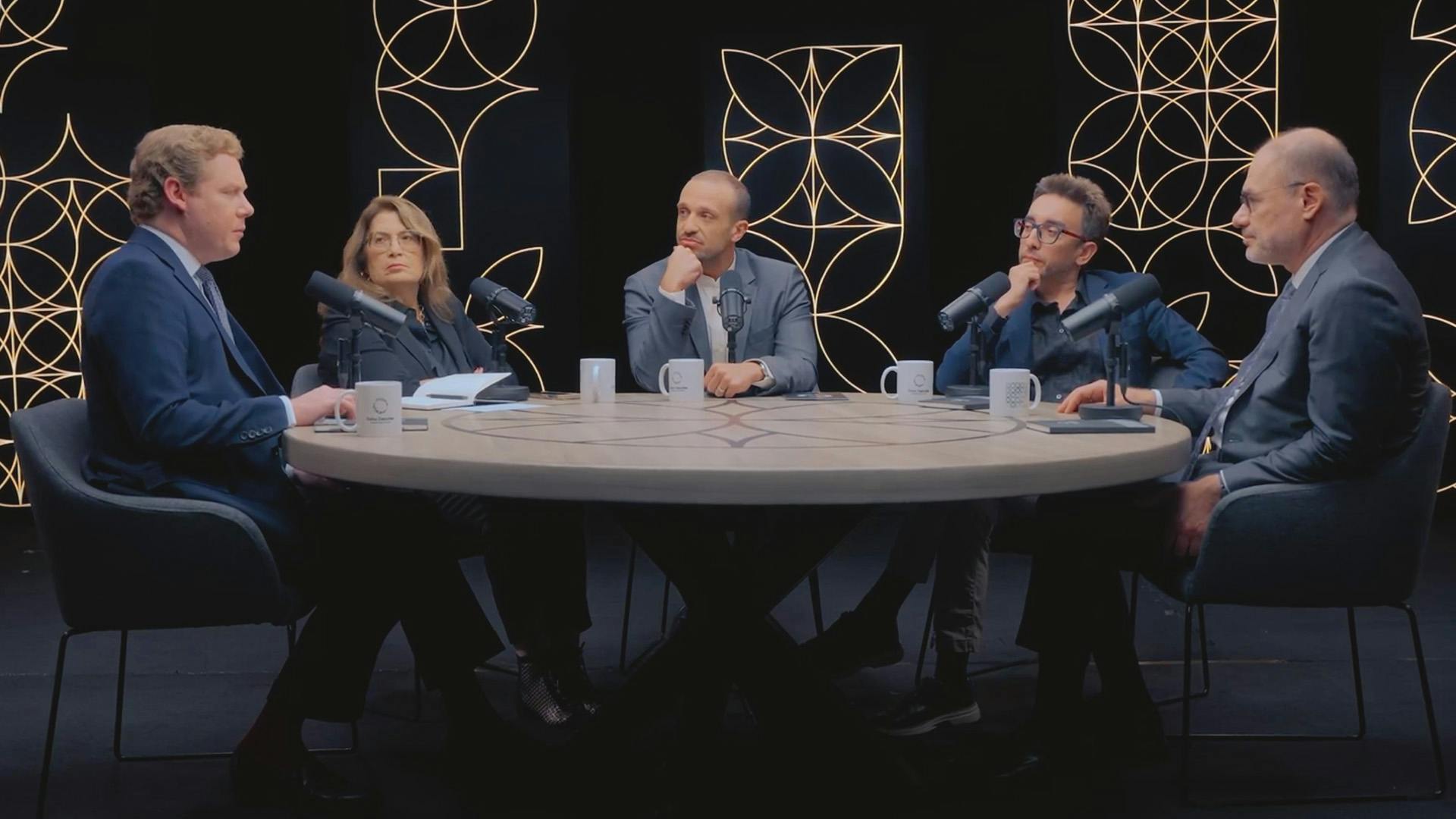
After Gaza, who sets the rules of global justice?
Can the West be trusted with global justice after Gaza?
Never has global justice faced a greater moral crisis than the destruction of Gaza, with the post-World-War-II moral order facing intense scrutiny. While Western-led institutions claim to champion human rights, when it comes to Gaza, do these institutions live up to their own ideals? In this episode of the Doha Debates Podcast, global ex
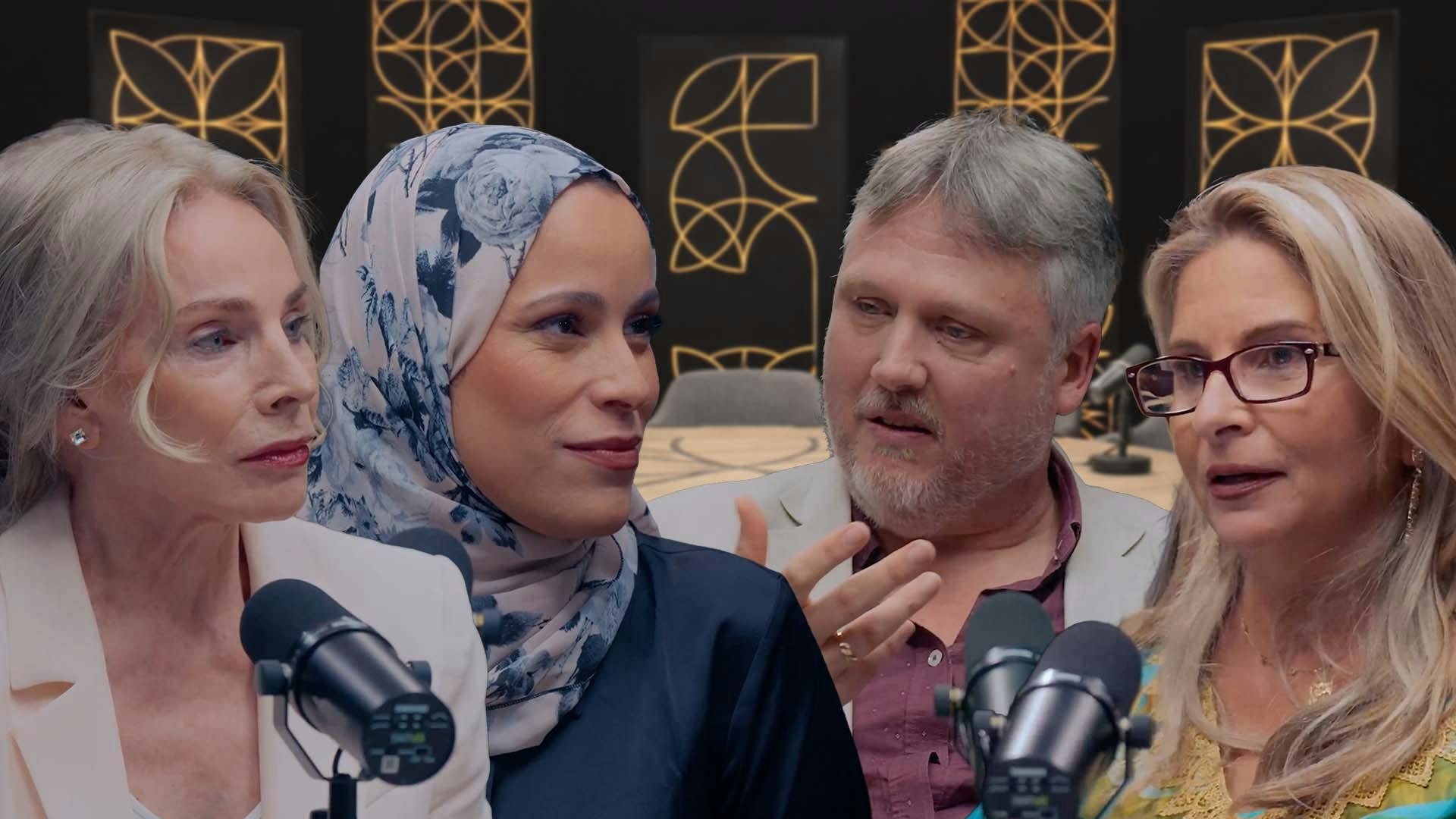
Should we embrace aging or try to engineer it away?
Should we accept aging or reverse it?
While the search for eternal youth is not new, what does it mean to value youth above all else? What do we lose in the process?
Many argue that science should extend our lives and reduce suffering. Others believe there must be limits. In this episode, experts debate whether we should handle the aging process with acceptance or with scientific interventio

Has disagreement become disinformation?
The battle over online disinformation is usually framed as a fight for truth. But it is also a fight over power.
As platforms tighten policies, algorithms quietly shape visibility and experts step in as arbiters of credibility, a deeper question emerges: are these systems protecting open discourse or controlling it?
In this episode of the Doha Debates Podcast, we explore the rise of digital ce
A new season of the Doha Debates Podcast 🎙️
Start the year 2026 with us as we discuss the questions shaping our world: What happens when disagreement is labeled disinformation? Can aging be cured — and should it be? After Gaza, who decides what justice looks like?
The Doha Debates Podcast returns with a bold, reimagined season, featuring Majlis-style debates that challenge you to think differently. Each week, our moderators sit down with
Global order: Which principles should shape our future?
Today, the global order is facing challenges from shifting power and ongoing conflicts around the world. In this moment of rapid change, our latest town hall sought to examine the competing values and principles that underpin our societies—and uncover fundamental truths about which philosophical building blocks are most essential to building a better, more equitable and peaceful world.
Expert gue
Narrative Power: Are Western narratives promoting global justice?
For the greater part of a century, conversations and narratives about global justice and free speech have been dominated by the West. From seminal works of history to newspapers of record to media networks to politics to public discourse, Western voices have often been louder than the rest.
And while the West has long claimed to act in the name of democracy, equality and freedom, some wonder whe

Should everything be up for debate?
At Doha Debates, we believe that debate can help solve some of the world's most challenging problems. But are there limits to what free speech and debate can accomplish?
Social media has allowed more people to connect and share their perspectives than ever before. That has led to an immense amount of learning and progress—but it's also led to an uptick in hate speech and misinformation, online an
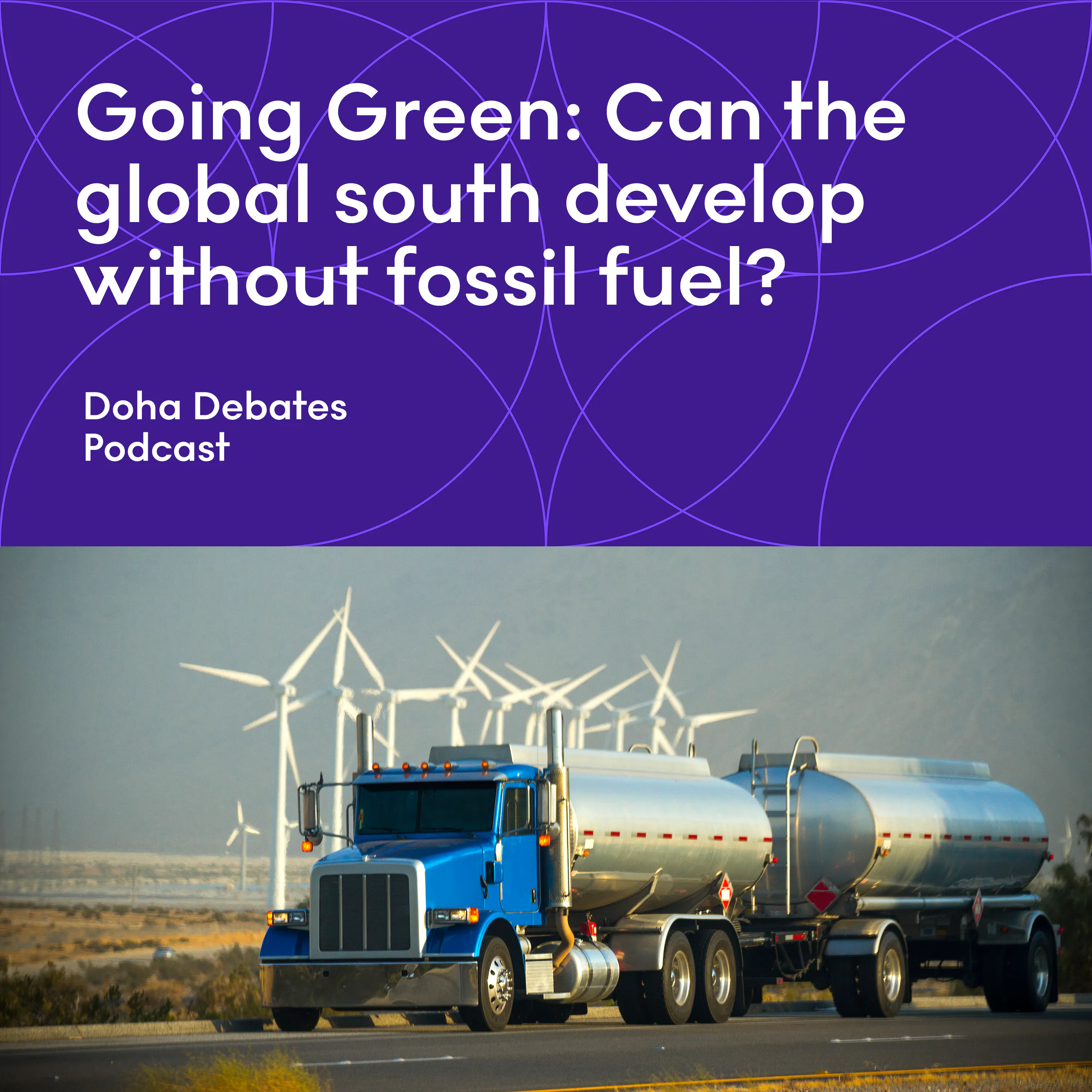
Going green: Can the global south develop without fossil fuel?
Climate anxieties—and global temperatures—are on the rise. According to the United Nations, if the planet warms by 1.5 degrees Celsius, we’ll be facing irreversible climate damage. To stop that increase, we need to reach net zero emissions by 2050. Reaching such an ambitious goal means changing a lot of our behaviors, including cutting back on our use of fossil fuels. But should everyone, and ever

Do race-based policies create a more equitable world?
Dozens of countries have implemented race-based policies, which factor race into hiring decisions or school admissions, in an effort to address historical traumas. Critics say that affirmative action and similar policies are counterproductive. Is it time to consider color-blind policies instead?
Thandiwe Ntshinga, South African author and researcher, says it’s important to have policies that addre
ENCORE: Rise of the Rest: Who should lead in a multipolar world?
What does a shift in the balance of power mean for the world? For much of the last 100 years, Western countries have dominated the global order. But now, with many nations vying for power, new regional partnerships and middle powers are on the rise. Economically, strategic alliances like BRICS are bolstering the influence of non-Western countries. And in a world that’s more digitally connected tha

Digging in: Should we mine in space?
The business of space is booming: Humans are leaving Earth’s atmosphere to mine for precious minerals that could bring trillions of dollars in profit. But with only a handful of laws currently regulating the final frontier, will space mining deepen existing global inequalities or could it save humanity?
Alice Gorman, space archaeologist, says space is for all humanity, but right now space mining
ENCORE: Digital dilemma: Does AI help or harm the creative community?
It can write emails, essays and even songs. It has created award-winning pieces of art, and it can take simple text prompts and generate eerily life-like videos. That’s right—we’re talking about artificial intelligence.
Generative AI programs such as ChatGPT, Sora and Midjourney are getting smarter and more powerful by the day—just this week, Nvidia, one of the world's leading AI companies, announ
Is obesity a choice?
Globally, 650 million people meet the threshold for obesity. With those numbers on the rise, we ask: Is obesity a matter of individual choice, or is it rooted in larger systemic problems?
Greg Doucette, a bodybuilder and health coach, says that obesity is a choice, and argues that everyone can lose weight if they follow a healthy diet and exercise regimen. While he concedes that genetic and envi
ENCORE: Driving change: Is it time to ban gasoline cars?
This week, we’re airing one of our favorite past episodes. This debate is spirited, informative and centered on a question that remains intensely relevant: Is it time to ban gasoline-powered vehicles?
Climate activist and author Aakash Ranison says that while electric vehicles may not be a silver-bullet solution to climate change, they are an important and urgent step in the right direction. On

Equal Education: How can we ensure AI access for all?
Let's face it. Artificial intelligence is everywhere around us—on our phones, in our homes, in our cars and in our schools. But that doesn't mean that we all have equal access to the best and most helpful learning technologies. As AI continues to develop and get smarter, how can we ensure universal access to these educational technologies so that all students can benefit?
Nadeem Nathoo, co-founde

Living to work: Is hustle culture healthy?
Do you live to work, or work to live? The World Happiness Report says that factors such as social support, economic security and work-life balance all contribute to life satisfaction and overall fulfillment. But checking all those boxes is easier said than done. Can we work hard toward our professional goals without sacrificing other parts of our lives?
Jennifer Moss, a speaker and strategist on
Peacekeeping power: Can the UN prevent wars?
Since its inception in 1945, the United Nations has committed to preventing world wars. However, recent and devastating conflicts, like the wars in Gaza, Ukraine and elsewhere, have brought the UN's shortcomings on this front into high relief. Is the United Nations capable of preventing war and keeping the peace, or is the institution too antiquated to resolve modern conflicts?
Anjali K. Dayal, po
The maestro of mediation
This week on the Doha Debates Podcast, we’re thrilled to share an episode from one of our other podcasts, The Negotiators.
William Ury is one of the most famous negotiation experts in the world. He co-wrote the classic book Getting to Yes and co-founded Harvard’s program on negotiation. In this episode, Ury shares negotiation advice and stories from famous peace talks in conversation with host J
Rise of the Rest: Who should lead in a multipolar world?
What does a shift in the balance of power mean for the world? For much of the last 100 years, Western countries have dominated the global order. But now, with many nations vying for power, new regional partnerships and middle powers are on the rise. Economically, strategic alliances like BRICS are bolstering the influence of non-Western countries. And in a world that’s more digitally connected tha
Orientalism Demystified: Eastern insights on Western myths | Doha Debates Town Hall
How much influence can a 19th century European art movement really have on the modern Arab world? Orientalism, an aesthetic movement depicting the East by Western artists, was for some the only exposure to Middle Eastern and Asian cultures. Some, like Palestinian American scholar Edward Said, said that Orientalism pervades Western art, pop culture and journalism even today, revealing the same ster
School of thought: Is AI helping us cheat or learn?
Generative AI has changed the way that some students approach their schoolwork. What does it mean for the state of education when students can ask ChatGPT to write an essay or solve a math problem? Artificial intelligence is causing parents to worry, and governments are struggling to keep up with this rapidly advancing technology. Are there beneficial uses of AI in classrooms, or will it do more h
State of scrutiny: Is mass surveillance justified?
Facial recognition software. CCTV cameras. License plate readers. Wiretapping. These are all ways that governments employ mass surveillance. Supporters of surveillance technology say these tools are necessary to keep everyone safe. But opponents raise concerns over privacy and human rights abuses. Where do we draw the line? How do we balance individual privacy and collective safety?
Cindy Cohn, e
Ethics of editing: Is genetic engineering worth the risk?
If you could prevent your future child from having a life-threatening disease, would you do it? What if you could prevent addictions or the development of bad habits before they were even born? What if you could genetically engineer your child to be taller, or if you could select their eye color or even their sex? How much of this would you be OK with—and which of these things give you “the ick”?
Shifting superpowers: Has the US peaked?
Has the US peaked? For much of the 20th century, the United States of America led the world economically, militarily and even culturally. But is its influence and power now in decline, and what would that mean for the rest of the world?
Lavina Lee, senior lecturer at Macquarie University in Australia, says that the US still has an important and powerful global role, despite the recent growth of ot
Modern men: Is masculinity in crisis?
Ken ventured out into the “real world” from Barbieland and returned with a new definition of masculinity. Andrew Tate’s influence on teen boys has amplified conversations about the “manosphere.” People around the world are eager for new rules for being a man—why?
Men are struggling. That’s what Richard Reeves, president of the American Institute for Boys and Men, contends, pointing to the widespr
Digital dilemma: Does AI help or harm the creative community?
It can write emails, essays and even songs. It has created award-winning pieces of art, and it’s one reason that Hollywood is on strike. That’s right—today’s podcast episode is about artificial intelligence.
Generative AI programs such as ChatGPT, DALL-E and Midjourney are worrying artists of all kinds about the future of art. Is AI coming for artists’ jobs and livelihood, or is it a helpful tool
Foreign Policy Live: Has China peaked?
This week, enjoy a special episode from our friends at Foreign Policy Magazine from their podcast FP Live.
Has China peaked? After decades of record economic growth, China’s economy is showing signs of a slowdown. In the world’s second-largest economy, recent numbers show a reduced rate of growth. Michael Beckley, senior fellow at the American Enterprise Institute and popularizer of the term “peak
Testing our ethics: Should we ban animal experiments?
Do you think it’s OK to sacrifice a mouse’s life to cure a disease? What if it were a monkey? A cow? Or a dog?
For a long time, research on animals has been a crucial component of scientific and medical innovation. Testing on animals has led to the development of the world's first vaccine. And drugs used to combat cancer, malaria and HIV/AIDS and many other illnesses would not have been possible w
Financial Future: Is it time to cancel Africa's debts?
Is it time to cancel the debts of low-income countries in the global south? It’s estimated that three out of five low-income countries are struggling to pay their debts. In Africa, 21 countries are either bankrupt or in financial distress, and are on the hook to repay more than $70 billion in 2023 alone. Freeing up this money could help these countries get back on their feet and invest more at hom
Driving change: Is it time to ban gasoline cars?
Is it time to ban gasoline-powered vehicles?
Climate activist and author Aakash Ranison says that while electric vehicles may not be a silver-bullet solution to climate change, they are an important and urgent step in the right direction. On the other side, journalist Jonathan Miltimore argues that there are actually lots of drawbacks and hidden costs to producing electric cars. Gas-powered vehi
High impact: Are some sports too violent for children?
Are some sports too violent for children? Kids and teens who play full- or high-contact sports like rugby, American football and mixed martial arts have higher rates of concussions, which can lead to traumatic brain injuries. On the flip side, there are also huge benefits to playing sports when you’re young, including community and confidence.
Dr. Bennet Omalu, a pioneer in understanding chronic
Food for thought: Is eating meat cruel?
About 1.5 billion people in the world eat a plant-based diet. For most of them, it’s a necessity, because meat is either too expensive or unavailable. But about 75 million people choose to go vegetarian for reasons like animal welfare and personal health. Some meat-eaters counter that humans have evolved to eat meat, and that animals can be raised and slaughtered humanely. Doha Debates asks: Is ch
Culture theft: Should museums return disputed artifacts?
Who does art belong to? Where should it live? And how can—or should—it be shared with the world? These are some of the questions at the heart of this week's debate.
Recently, museums like the Smithsonian in the US and the Horniman Museum and Gardens in the UK have made headlines by returning stolen and disputed artifacts to Nigeria, the country they were taken from centuries ago. Should more muse
Virtual violence: Do video games change our behavior?
Video games are built on creative storytelling and intricate worldbuilding, but what happens when the violence depicted in video games starts to spill over into the real world? Researchers at Dartmouth University have found a link between violence in video games and increased physical aggression in teens and preteens. Game designer Bahiyya Khan says that while violence can be important to video ga
Doha Debates Podcast Trailer
Introducing the Doha Debates Podcast: A new debate every two weeks.
Tackling the world’s most pressing issues, the podcast brings together people with starkly different opinions for an in-depth and human conversation that tries to find common ground. With a rotation of hosts and young guest voices from the Doha Debates ambassador program, join us for debate, dialogue and inspiration.
Course Correction S3 Part VI: Finding Acceptance
Note: This episode discusses suicide.
In the final installment of our six-part series about the refugee experience, host Nelufar Hedayat talks to weightlifter, nurse and refugee Cyrille Tchatchet. A native of Cameroon, Cyrille first came to the UK in 2014 to compete in the Commonwealth Games. Feeling that it was too unsafe to return home, he became a refugee, experiencing both homelessness and dep
Course Correction S3 Part V: The Path to Permanence
More than 85 percent of refugees and asylum-seekers are hosted in developing countries, many of which neighbor the countries being fled. In this episode, host Nelufar Hedayat looks at the role that local communities can play in hosting refugees.
Nelufar speaks with Rodaan Al Galidi, who talks about his experiences fleeing Iraq to start a new life in the Netherlands. UNHCR Goodwill Ambassador and a
Bonus: Malala Yousafzai Town Hall
This week, a bonus episode: A town-hall-style discussion with Malala Yousafzai on the future of women's and girls' education in Afghanistan and other conflict areas.
In the six months since the Taliban seized control of Afghanistan, many schools and universities have closed their doors to young women, and promises to reopen have gone unfulfilled. Education and equality advocate Malala Yousafzai jo
Course Correction S3 Part IV: Pursuing Education
Jennifer Roberts, a senior education officer with UNHCR, talks to host Nelufar Hedayat about the 10 million refugee children worldwide who lack access to education, what it takes to educate displaced people and how some host countries are working to meet the challenge.
Next, Nelufar speaks with Dr. Saleema Rehman, an Afghan refugee who received her medical degree in Pakistan. Dr. Rehman talks abou
Course Correction S3 Part III: Healing the Mind
In Part III of our season on refugees, we look at the mental-health toll of living as a refugee or an internally displaced person. Host Nelufar Hedayat speaks with an internally displaced Afghan woman about trying to care for herself and her children while living in a shipping container. She also examines different ways that refugees define and experience the trauma of conflict, and she shares sto
Course Correction S3 Part II: Healing the Body
On this episode of our season chronicling the refugee experience, we’re focusing on bodily harm. What kinds of injuries do displaced people suffer, and what does it take to tend to those injuries — not just the ones that can be seen, but the invisible ones that might take longer to heal? This episode features a first-hand account from an internally displaced Afghan dealing with a long term foot in
Course Correction S3 Part I: Escaping Conflict
In the premiere episode of our season on the refugee journey, we'll take a closer look at the moment of displacement and its immediate aftermath. Hear from experts on what causes displacement, and what resources refugees and internally displaced persons have once they decide it's no longer safe to remain at home. This episode features the story of Mohammed Anwar, a Rohingya refugee who nearly lost
Course Correction S3 Trailer: The Refugee Journey
For the past two seasons of the Course Correction podcast, we’ve challenged ourselves to find ways to change the world. In season one, host Nelufar Hedayat conducted personal challenges to explore how individuals can have a real impact on global issues. In season two, she focused on listening to people she disagreed with in order to figure out how to bridge the gaps that divide us.
This season, w
Introducing The Long Game
Course Correction is proud to introduce listeners to The Long Game, a new sports-themed podcast that highlights stories of courage and conviction on and off the field.
In this episode, The Long Game host and US Olympian Ibtihaj Muhammad talks to Amy Mackinnon from Foreign Policy Playlist to introduce herself and the new podcast.
The Long Game is a production of Doha Debates and Foreign Policy.
Course Correction S2: Refugees and the fight against populism
Violence, unrest and the coronavirus pandemic have displaced an unprecedented number of people globally. Yet instead of offering shelter to refugees, many countries use populist rhetoric to excuse their global responsibility and reject those in need.
In the final episode of season two of Course Correction, host Nelufar Hedayat speaks with refugee advocates David Miliband and Melanie Nezer, as well
Course Correction S2: Palestine, Israel and the courage of dialogue
In this episode, host Nelufar Hedayat examines the power and limitations of dialogue with three people working to create justice and equality in Israel and Palestine. She speaks with rapper Tamer Nafar, a Palestinian who lives in Israel, about how he uses music to call attention to the lives of his fellow Palestinians in Israel. Then she speaks with Hussein Agha, an advisor to Palestinian leaders
Course Correction S2: Masculinity, feminism and the fight for gender equality
Host Nelufar Hedayat looks at the evolution of masculinity and what — if any — role men have in within the feminist movements. First she hears from British comedian David Baddiel about how he went from being a "lad" comic to someone acutely aware of gender dynamics.
For her challenging interview, Nelufar speaks with French writer and activist Pauline Harmange, who argues that modern men have no pl
Course Correction S2: Fixing the generational wealth gap
Host Nelufar Hedayat begins this episode with a trip to her old London neighborhood of Hampstead ,where she and her younger sister Fatema go apartment hunting and find out just how unattainable home ownership is for younger generations.
Next she talks to debt relief advocate Astra Taylor about some of the factors that have created the generational wealth gap. Finally, Jayathma Wickramanayake, the
Course Correction S2: Fear the robots? AI, automation and equity
Host Nelufar Hedayat explores the economic and social considerations around automation and artificial intelligence. She talks to three guests with different views about automation, and looks at its effect on women working in Bangladesh's garment industry, the social changes necessary to ensure ethical AI use and questions who should be writing the rules governing AI.

Course Correction S2: Does French secularism promote freedom or stoke Islamophobia?
In this episode, host Nelufar Hedayat examines France's Laïcite or "secularism" laws, which discourage religious involvement in public life.
First she speaks about experiences wearing the hijab in Western Europe with members of Collectif Les 100 Diplômées, a Belgian group that supports Muslim women. Then French lawmaker Aurore Bergé discusses why she believes that restricting where the hijab can
Course Correction S2: How alarmist should we be about climate change?
How do we work together to address climate change when there's no consensus on the solution? Host Nelufar Hedayat explores multiple solutions to climate change with Per Espen Stoknes, a Norwegian psychologist who specializes in the psychology of economic choices for climate change. She then speaks to Harvard geologist Dr. Daniel Schrag about how the scientific community could improve its messaging
Course Correction S2: Can "cancel culture" go too far?
Host Nelufar Hedayat talks about being called out online, and speaks to a crisis management expert about the best way to handle such situations. She then talks to two journalists who have faced online harassment and real-world consequences for their opinions. Finally, she hosts a roundtable discussion on cancel culture to try and parse when, if ever, canceling someone is appropriate.
Course Correction S2: The Disrupters: Using free speech for good and evil
Social media has made it easier than ever to share ideas around the world and galvanize people into action. Host Nelufar Hedayat looks at the double-edged sword of free speech from the perspective of social media influencer, a free speech lawyer and two tech veterans who say that today's tech companies wield too much power in determining what kind of speech should be permissible.
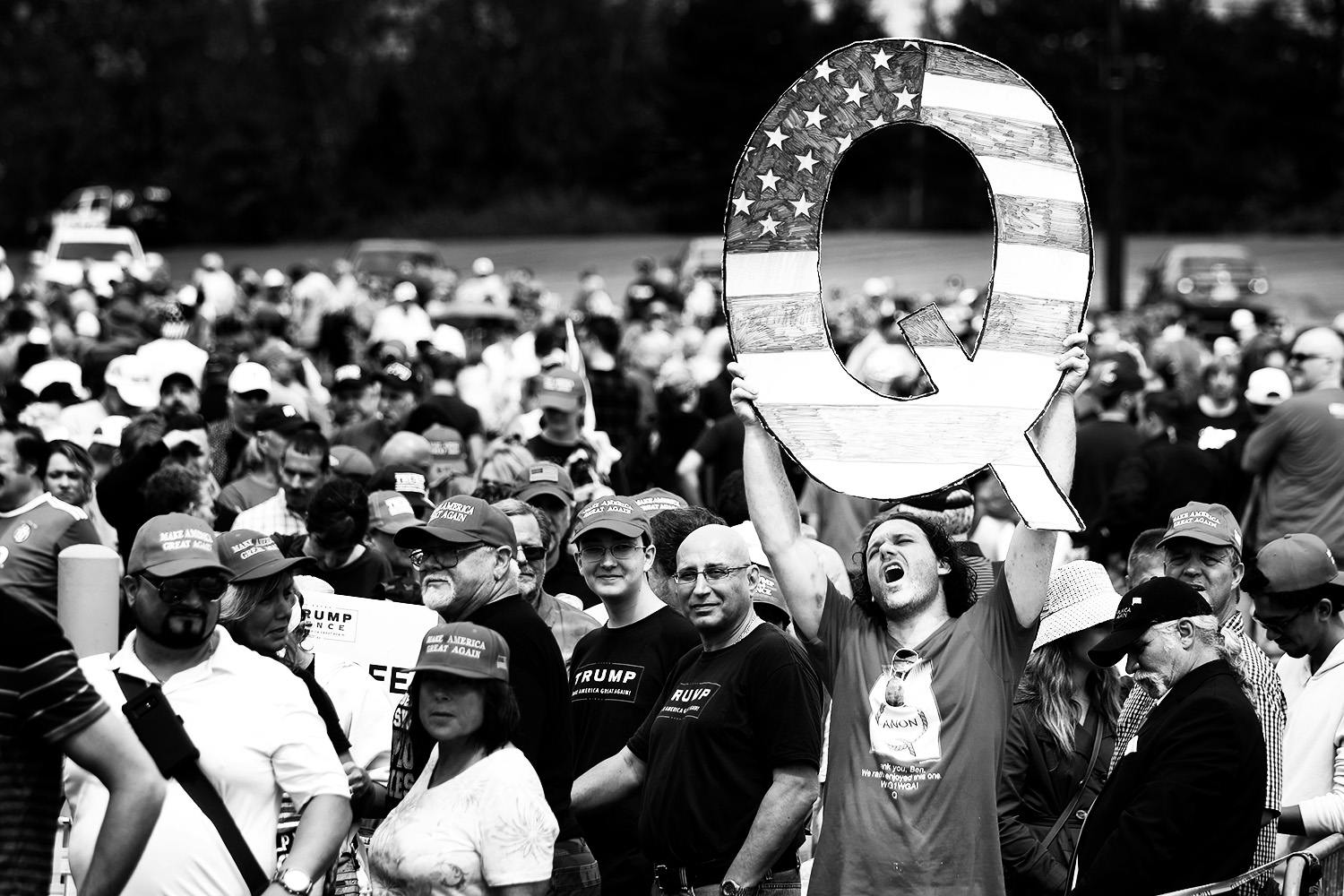
Course Correction S2: Disinformation: How can we beat "fake news"?
Why does it matter that different people have different perceptions of the truth? If you're trying to run a country, it can make a big difference. In this episode host Nelufar Hedayat speaks with former U.S. Republican Congressman Denver Riggleman, "godfather of fake news" Jestin Coler and Belarusian politician Svetlana Tikhanovskaya about disinformation's effect on politics and leadership.
Course Correction S2: Reparations: Can we right historical wrongs?
Can reparations help repair generations of systemic racism? Beginning in the late 1940s, the British government invited Caribbean citizens to immigrate to England to help rebuild the country after World War II. Known as the Windrush generation, the immigrants and their descendants have frequently been denied basic British citizenship rights. We talk to a member of the Windrush generation who wants
Course Correction S2: COVID-19: When is the cure worse than the pandemic?
How have different countries have dealt with the pandemic? What is best for society when we do things with shared interests in mind, versus looking out for individual needs? Featured voices include Swedish physician Johnny Ludvigsson, who is against lockdowns, and British economist Noreena Hertz.
*A note to listeners the interviews for this podcast were recorded over the winter and so some of the
Course Correction Season 2 Trailer
In the second season of Course Correction, host Nelufar Hedayat is taking on a new challenge: Listening to people she disagrees with. Each episode addresses one polarizing issue, and Nelufar will engage with people whose opinions are very different from her own — and try to keep an open mind.
Course Correction S1: How Course Correction Changed My Life
In the final episode of the season, Nelufar speaks with conflict resolution expert and friend Dr. Govinda Clayton about how to listen, how to be heard and how we can all change for the better. Read the episode transcript here.
Course Correction S1: Targeted for Telling the Truth
This special episode is a live recording from the Sundance Film Festival, with Filipino journalist Maria Ressa and filmmaker Ramona S. Diaz. Diaz’s most recent film, A Thousand Cuts, documents Ressa’s work to fight disinformation and the weakening of the Philippines’ democracy. Read the episode transcript here.
Course Correction S1: Ending Period Poverty
Menstruation is normal — so why is it still taboo to talk about in some parts of the world? Nelufar has a heart-to-heart with her childhood friends about period stigma. Then she talks with Mandu Reid, the leader of the British Women’s Equality Party and founder of the Cup Effect, an organization that offers menstrual cups to people in need. Read the episode transcript here.
Course Correction S1: Joy Buolamwini: Artificial Intelligence For All
Artificial intelligence has as much racial and gender bias as the people who create it. Joy Buolamwini, a computer scientist and digital activist at the MIT Media Lab, talks with host Nelufar Hedayat about how to build artificial intelligence systems that don’t perpetuate social inequalities. Read the episode transcript here.
Course Correction S1: Standing up to Big Data
Your phone is tracking you all the time. Tech companies are monetizing your personal data. Is there anything that you can do about it? Nelufar talks to Danny O’Brien of the Electronic Frontier Foundation about why data privacy should be a human right. Then we discover some surprising ways social media ad targeting is being used to do good in the world. Read the episode transcript here.
Course Correction S1: Zeid Ra’ad al-Hussein: In Defense of Human Rights
The public’s trust in governments is at an all-time low. Zeid Ra’ad al-Hussein is a veteran diplomat and former United Nations High Commissioner for Human Rights. He talks with host Nelufar Hedayat about standing up to governments — and the enemies he made along the way. Read the episode transcript here.